
Quality requirements for nanomedicines: Filling the gaps – the project was successfully completed
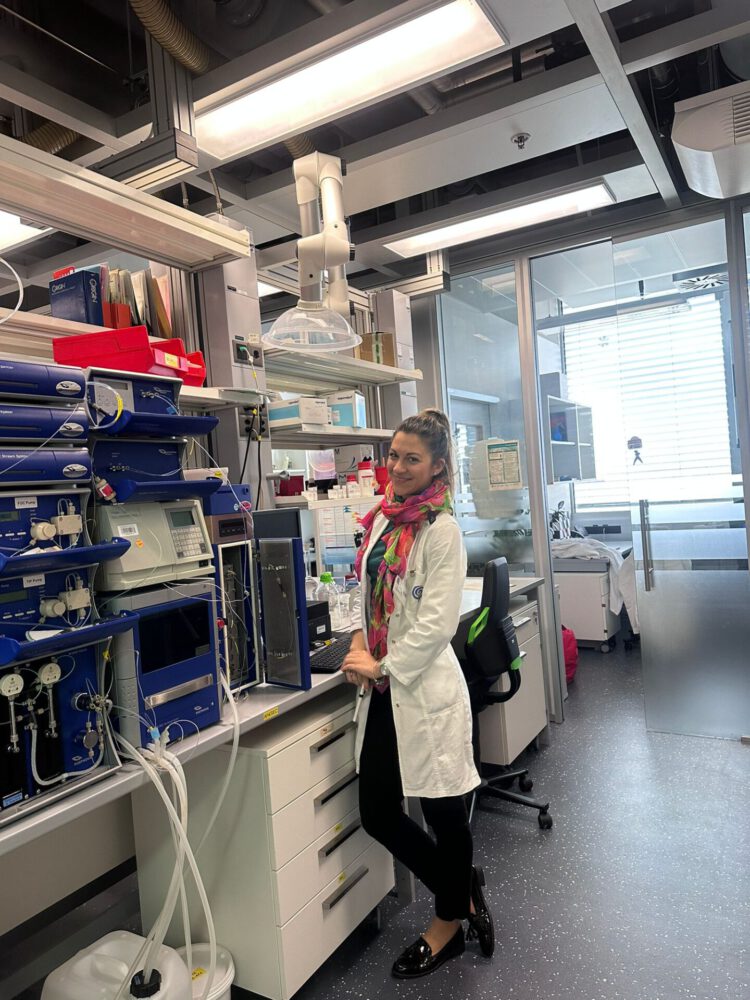 We congratulate Dr. Ines Nikolic on the successful completion of the project “Quality requirements for nanomedicines: Filling the gaps,” which was funded by the Frankfurt Foundation Quality of Medicines. She carried out the work as a postdoctoral researcher in the working group of Prof. Gerrit Borchard at the University of Geneva.
In the first phase, Dr. Nikolic conducted a comprehensive literature review. The resulting review article was published in the Archives of Pharmacy. This work critically assesses the state of research, identifies key knowledge gaps, and defines the experimental strategy and overarching research questions of the project. The latter were addressed in three task areas.
In the next step, a critical and practice-oriented selection of characterization methods was determined. Dynamic light scattering (DLS) in combination with cryogenic transmission electron microscopy (cryo-TEM) was identified as a reliable core method for characterizing nanoparticle size. Techniques with increasing analytical complexity, such as analytical ultracentrifugation (AUC), asymmetric field-flow fractionation (AF4), and small-angle X-ray scattering (SAXS), provided valuable complementary information on particle properties. While these advanced methods offer deep insights during development phases or for comparative studies of non-biological complex drugs, the project has shown that they are not essential for routine quality control purposes.
Based on these findings, an international laboratory comparison study involving five institutions and six measuring devices was conducted, which formulated specific best practice recommendations for nanoparticle size determination and demonstrated its central importance for quality and approval assessments in nanomedicine. The results were published in the International Journal of Pharmaceutics.
Another issue focused on biorelevant characterization, addressing the interactions of nanoparticles with biomolecules (proteins, human serum) and the development of toxicity tests specifically adapted for the evaluation of nanomedicine. Within this framework, Nikolic developed and optimized two standard operating procedures for nanomedicines: the lactate dehydrogenase release test and the propidium iodide-based test. The results of this work were published in Drug Delivery and Translational Research.
All project objectives were successfully achieved, resulting in a comprehensive set of physicochemical and biological data for selected nanoparticle systems. The publications can be requested from the FFQM.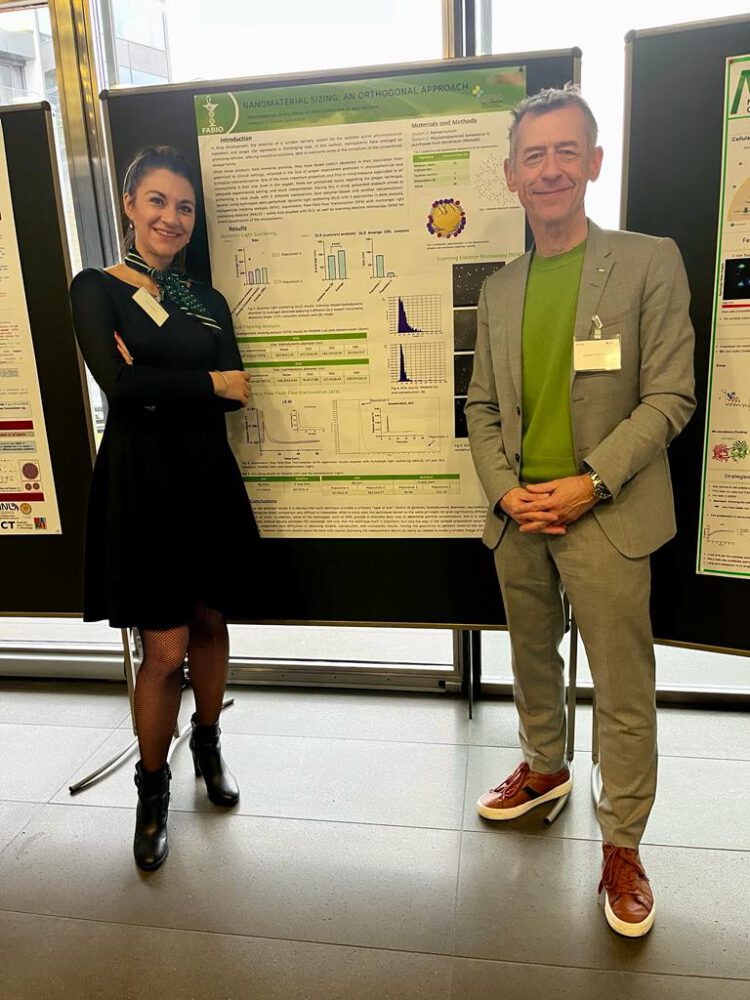
The project consortium includes:
School of Pharmaceutical Sciences, University of Geneva (Geneva, Switzerland) – Institute of Pharmaceutical Sciences of Western Switzerland
Faculty of Pharmacy, University of Belgrade (Belgrade, Serbia)
Center for Microelectronic Technologies, Institute of Chemistry, Technology and Metallurgy, University of Belgrade (Belgrade, Serbia)
Swiss Federal Laboratories for Materials Science and Technology (EMPA), St. Gallen, Switzerland
The research was additionally supported by the European Commission Joint Research Centre, Nanobiotechnology Laboratory (Ispra, Italy).


